
Owning and operating a commercial property is an ongoing battle against time, the elements, and changing market expectations. A commercial building is never truly static; it is constantly under attack from environmental wear and tear, and properties that remain stagnant quickly lose their market value. To maintain a competitive edge and attract high-tier tenants, facility managers and property owners must adopt a dual strategy of asset protection and strategic modernization.
Think of this dual approach in terms of playing defense and offense. Protection is your defensive strategy. It involves identifying vulnerabilities, stopping leaks, preventing structural decay, and ensuring the physical envelope of your building remains impenetrable. Upgrading is your offensive strategy. It focuses on modernizing the facility to lower energy consumption, boost curb appeal, and align with the technological and aesthetic expectations of modern corporate tenants.
When you successfully merge rigorous, defensive maintenance with offensive, strategic modernizations, the financial upside is massive. You effectively lower your Operating Expenses (OpEx) by improving energy efficiency and preventing catastrophic system failures, while simultaneously increasing the property’s Net Operating Income (NOI) through higher lease rates and better tenant retention. The following guide provides an in-depth roadmap for auditing, protecting, and transforming your facility into a highly resilient, market-leading asset.
Conduct a Comprehensive Audit of the Upper Envelope
When evaluating the structural vulnerabilities of a commercial facility, the top of the building is invariably the source of the most expensive liabilities. A visual check from the ground or a quick glance from an access hatch is entirely insufficient for understanding the health of your building’s envelope. The surface that protects your entire asset is constantly subjected to brutal thermal shock, expanding during the heat of the day and contracting rapidly at night. This movement, combined with severe weather, inevitably leads to microscopic decay that can threaten the entire structure.
The danger of this decay lies in its invisibility. Ultraviolet degradation bakes the plasticizers out of single-ply membranes, leaving them brittle and prone to cracking. Ponding water—areas where water sits for more than 48 hours after a rainstorm—slowly eats away at seams and sealants. By the time a leak becomes visible on a drop ceiling inside an office, the water has likely already saturated the underlying polyisocyanurate insulation and begun rusting the structural steel decking.
-
Understanding the Anatomy of Your Structure: A commercial upper envelope is not a single layer; it is a complex assembly of decking, vapor barriers, rigid insulation, and waterproofing membranes. An audit must evaluate every layer. Advanced diagnostics, such as infrared thermography scanning, can detect temperature variations that indicate wet, ruined insulation hidden beneath a seemingly intact surface membrane.
-
Navigating Vendor Selection: Because of the complexity and scale of these structures, you must be incredibly discerning when soliciting bids for an audit. It is highly recommended to reach out to several established commercial roofing companies to get a baseline assessment and compare their findings. You need professionals who understand the specific engineering requirements of flat and low-slope architecture.
-
Scale and Expertise: While small-scale local roofers are excellent resources for residential pitched structures or minor shingle repairs on small stand-alone retail shops, massive industrial and corporate facilities require specialized, heavy-duty expertise, commercial-grade liability insurance, and a deep understanding of complex drainage systems.
-
Core Sampling: A thorough audit should include core sampling. This involves extracting a small, cylindrical cross-section of the assembly to determine the exact number of layers, the presence of asbestos in older buildings, and the precise condition of the structural deck before any major capital decisions are made.
Implement Advanced Weatherproofing and Structural Care
Once you have audited the top of your building, the next step is to implement advanced weatherproofing measures. The goal here is to extend the lifespan of the current asset for as long as safely possible. A complete tear-off and replacement is one of the largest capital expenditures a property owner can face. By prioritizing structural care and preventative treatments, you can delay this massive expense by a decade or more while still maintaining a watertight environment.
Tackling severe weather threats requires a proactive mindset. You cannot wait for hurricane season or winter blizzards to test the integrity of your building. You must fortify the vulnerable transition points where water is most likely to penetrate.
-
Extending Asset Lifespan with Coatings: If your membrane is aging but the underlying insulation is still dry and intact, applying an elastomeric silicone or acrylic coating is a brilliant financial move. These liquid-applied membranes cure to form a seamless, rubberized layer over the existing structure. Not only does this seal microscopic cracks and pinholes, but the bright white, reflective finish significantly lowers the cooling costs of the building.
-
Fortifying Transition Points: The vast majority of leaks do not occur in the center of a membrane field; they occur at the flashing details. You must secure an annual contract for a dedicated commercial roofing service to inspect and reseal the flashing around HVAC curbs, pitch pockets, skylights, and parapet walls.
-
Managing Water Flow: Flat buildings do not shed water naturally like pitched residential houses. They rely on a carefully engineered system of internal drains, scuppers, and collector heads. Routine care must include clearing these pathways of autumn leaves, plastic bags, and sediment. A blocked internal drain during a heavy thunderstorm can lead to a localized structural collapse due to the immense dead weight of pooling water.
-
Documenting Care for Warranties: Modern building materials often come with 20-year or 30-year No Dollar Limit (NDL) warranties. However, manufacturers are quick to void these warranties if they discover the building has been neglected. Hiring certified commercial roofing contractors to address structural rot, fix deep membrane punctures immediately after a severe hail storm, and maintain a detailed, written log of all inspections ensures that your warranty remains valid when you actually need it.
Transform Your Rooftop Into an Energy-Generating Asset
Once the envelope of your building is fully secured, waterproofed, and structurally sound, you can transition from playing defense to playing offense. In today’s corporate leasing environment, a building’s energy profile is a major negotiating factor. Modern corporate tenants, particularly Fortune 500 companies and tech firms, prioritize buildings with high Environmental, Social, and Governance (ESG) ratings. They want to occupy spaces that align with their corporate sustainability pledges and offer predictable, lower utility burdens.
Transforming the unused square footage at the top of your building into an active energy plant is one of the most powerful upgrades you can make. However, it is an upgrade that requires meticulous planning and structural coordination.
-
The Shift Toward Green Energy: Installing commercial solar power panels on flat or low-slope surfaces offers a massive, long-term return on investment. By generating your own electricity, you drastically reduce your reliance on the municipal grid, insulate your operating budget from volatile energy price hikes, and make the property highly attractive to premium, eco-conscious tenants.
-
Evaluating Structural Load: Before you purchase a single photovoltaic panel, a structural engineer must assess the building. Solar arrays add significant “dead weight” to the structure. Furthermore, they create “wind uplift” hazards. When heavy winds sweep across a flat surface, the solar panels can act like airplane wings, creating a lifting force that strains the building’s structural decking.
-
Mounting Strategies and Membrane Protection: There are two primary ways to install these arrays: ballasted mounts (which use heavy concrete blocks to hold the panels down) and penetrating mounts (which are physically bolted into the structural steel). Both carry risks. You absolutely must coordinate the installation with experienced commercial roofers to ensure that the mounting hardware does not crush the rigid insulation, puncture the waterproofing membrane, or inadvertently void your manufacturer warranty.
-
Capitalizing on Tax Incentives: The upfront capital expenditure for renewable energy can be daunting, but the financial blow is heavily softened by federal and local tax incentives. Programs like the Investment Tax Credit (ITC) and the Modified Accelerated Cost-Recovery System (MACRS) allow property owners to write off a significant portion of the installation costs, accelerating the breakeven point and boosting the long-term ROI.
Eradicate Exterior Decay and Optimize Property Accessibility
While the top of your building protects the asset, the exterior facades and surrounding hardscapes dictate how the asset is perceived by the public. The psychology of curb appeal is undeniably powerful in commercial real estate. Dirt, grime, rust stains, and crumbling walkways instantly devalue the perceived class of the building. A prospective tenant arriving for a property tour will subconsciously judge the competence of the management company before they even walk through the front doors.
Beyond aesthetics, exterior decay represents a significant legal and financial liability. A neglected property exterior is a breeding ground for structural degradation and a hotspot for personal injury lawsuits. Eradicating this decay requires a systematic approach to cleaning and hardscape optimization.
-
Preventing Biological Growth: Building materials like brick, stucco, precast concrete, and EIFS (Exterior Insulation and Finish Systems) are porous. Over time, they absorb moisture, creating a perfect environment for algae, mold, and mildew. If left unchecked, this biological growth does more than just look unsightly; it creates acidic byproducts that eat away at mortar joints and accelerate masonry decay.
-
Strategic Exterior Cleaning: To combat this, schedule routine commercial pressure washing to safely strip away years of exhaust soot, biological growth, and atmospheric grime. It is important to note that different surfaces require different techniques. While concrete sidewalks can handle high-pressure washing, delicate stucco facades or older masonry require “soft washing”—a technique that uses specialized, eco-friendly chemical surfactants to kill mold at its roots without blasting away the delicate exterior finish.
-
Mitigating Vehicular and Pedestrian Liability: The condition of your parking area is a major liability checkpoint for insurance underwriters. Deep potholes, heaving concrete sidewalks, and crumbling curbs are severe slip-and-fall hazards. Additionally, if your accessible parking zones are faded or poorly graded, you are violating the Americans with Disabilities Act (ADA), opening the door to predatory lawsuits.
-
Optimizing the Asphalt Asset: Asphalt is highly susceptible to ultraviolet oxidation and chemical spills from leaking vehicles. Utilizing professional commercial asphalt paving services to mill and resurface deteriorating lots, or simply applying a fresh sealcoat and highly visible restriping, extends the life of the surface. It provides a smooth, jet-black, and highly organized environment that ensures safe traffic flow and keeps you strictly compliant with local accessibility ordinances.
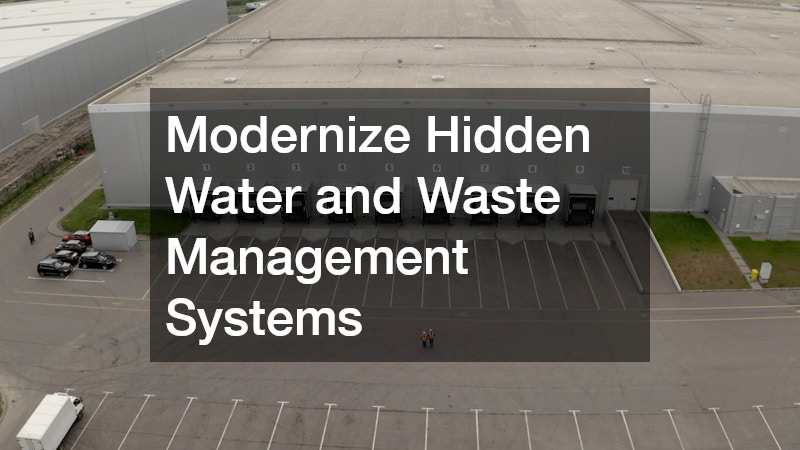
Modernize Hidden Water and Waste Management Systems
The most dangerous areas for deferred maintenance are the ones you cannot see. The utility infrastructure hidden behind drywall, buried under concrete slabs, and trenched beneath the parking lot is the lifeblood of your commercial operations. When exterior paint peels, it is an eyesore; when a hidden wastewater pipe bursts, it is a localized catastrophe that can force immediate business closures, result in biohazard contamination, and cost tens of thousands of dollars in emergency remediation.
Modernizing your water and waste management systems is not just about preventing disasters; it is about efficiency. Water utility rates continue to rise, and inefficient, aging plumbing fixtures silently drain your operating budget day after day.
-
Upgrading to High-Efficiency Fixtures: Older commercial buildings are often outfitted with plumbing fixtures that use an excessive amount of water. Swapping out outdated toilets, urinals, and faucets for low-flow, high-efficiency models can slash municipal water usage by up to thirty percent. Furthermore, transitioning to touchless, sensor-operated fixtures improves restroom hygiene, reduces the spread of illness among occupants, and prevents damage caused by tenants accidentally leaving faucets running.
-
Proactive Pipe Maintenance: Cast iron waste lines degrade and rust from the inside out, catching debris and causing severe backups. You should keep licensed commercial plumbers on retainer to perform annual camera inspections of your main lines. They can utilize high-pressure hydro-jetting to safely scour the interior walls of your pipes, removing decades of calcified scale and hardened grease before a catastrophic blockage occurs. These professionals will also ensure your mandated backflow prevention devices are tested and certified.
-
Managing Private Waste Systems: While buildings in dense urban centers rely on municipal sewers, many suburban industrial parks, distribution centers, and rural office buildings rely on private, self-contained waste systems. These systems are highly sensitive and require strict oversight to function correctly under the heavy daily load of a commercial workforce.
-
Preventing Biohazard Emergencies: If your property utilizes a private drain field, lift station, or holding tank, a “flush and forget” mentality will eventually lead to an environmental disaster. Facilities operating off the grid must schedule routine pumping and rigorous inspections with reliable commercial septic services to ensure grease traps are clear, submersible pumps are functional, and the drain field is not oversaturated, thereby avoiding health code violations and protecting the surrounding groundwater.
Phasing Your Upgrades for Financial Stability
Protecting and upgrading a commercial building is a marathon, not a sprint. Attempting to tackle every vulnerability, modernize every restroom, and overhaul the entire exterior in a single fiscal year will quickly lead to capital exhaustion. To maintain financial stability, property owners and facility managers must learn to phase their upgrades strategically over several quarters or even years, basing their decisions on a strict hierarchy of urgency, life-safety, and budget availability.
The golden rule of property management is to prioritize safety and structural integrity over aesthetics. It does not matter how beautifully you have redesigned the interior lobby if the utility infrastructure is failing or the upper envelope cannot keep the rain out. Always direct your initial capital toward weatherproofing, securing your hidden pipes, and mitigating liability hazards in the parking lot. Once the foundational assets are secured, you can confidently redirect your budget toward the offensive strategies—like green energy integration and architectural modernizations—that drive up your lease rates.
The difference between a depreciating building and a highly sought-after commercial asset is entirely dependent on the actions of its management. Do not wait for a structural failure to dictate your spending. Take proactive control of your real estate today by auditing your current vendor list, thoroughly inspecting your most vulnerable systems, and scheduling your critical preventative maintenance before the next season begins.