
In the high-stakes world of large-scale construction, heavy manufacturing, and infrastructure development, a project’s timeline and profit margin live or die by the machinery deployed on the ground. You can assemble the most brilliant architectural minds, draft the most flawless engineering blueprints, and hire the most dedicated manual workforce in the region, but if the physical tools required to execute the vision are inadequate, the entire operation will grind to a devastating halt. The procurement and deployment of machinery are not simply administrative tasks to be checked off a list; they are foundational strategic decisions that dictate the daily heartbeat and financial viability of the entire site.
Selecting the wrong machinery introduces catastrophic hidden dangers to your operational flow. Choosing undersized machines in an attempt to save a few dollars upfront inevitably leads to immediate workflow bottlenecks, overworked engines, and burnt-out motors that bring production to a standstill. Conversely, over-specifying machinery and bringing in massive, unnecessarily powerful units drastically drains your capital budget, wastes expensive fuel, and creates absolute logistical nightmares as operators struggle to maneuver oversized vehicles through tight, congested job sites. Finding the perfect equilibrium is a complex challenge that requires a deep understanding of site engineering, fluid logistics, and corporate finance.
This comprehensive guide is designed to serve as your master blueprint for machinery procurement. We will walk you through the exact, uncompromising steps needed to assess the physical and electrical constraints of your job site, balance the harsh financial realities of temporary versus permanent assets, and secure specialized muscle without ever compromising on site safety or operational efficiency. By treating procurement as a strategic engineering function, you can ensure your next project is delivered safely, on time, and well under budget.
Conduct a Comprehensive Site and Power Audit
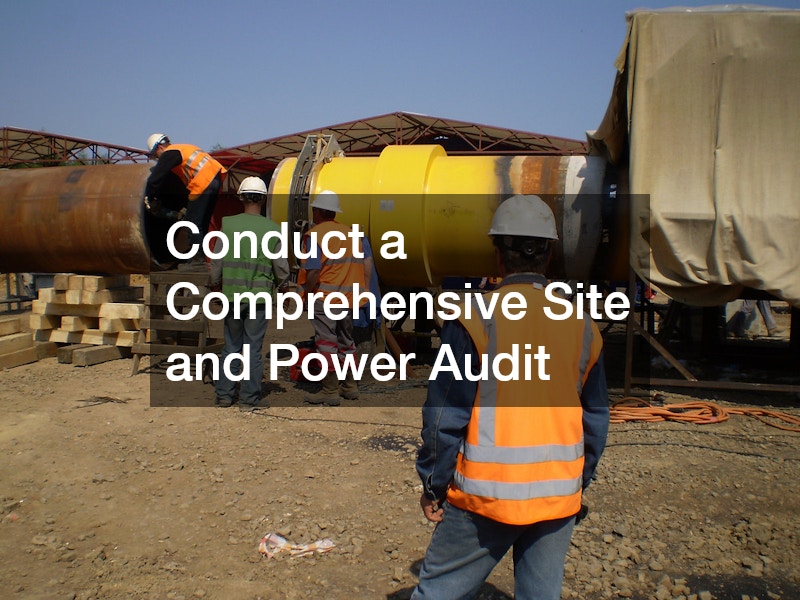
The most critical step in sourcing machinery takes place long before any catalogs are opened or vendor contracts are signed. Rushing into procurement without a deep, localized understanding of your specific job site is a recipe for logistical failure. Every site presents unique environmental, spatial, and electrical challenges. You must conduct a comprehensive, boots-on-the-ground audit to identify these constraints, ensuring that the machinery you eventually order can actually operate safely and effectively within the physical boundaries of your project.
Calculate Total Power Requirements Before Groundbreaking
A common and highly expensive mistake made by project managers is blindly relying on the existing municipal electrical grid or undersized temporary power poles to run heavy machinery. Modern industrial sites are incredibly power-hungry, and inadequate electricity will destroy sensitive motors and trigger constant delays.
-
Audit starting versus running wattage: It is imperative to understand that heavy electrical tools, air compressors, and welding rigs require a massive surge of power simply to turn on. This “starting wattage” can be double or triple the “running wattage.” You must calculate the combined starting wattage of every single electrical machine that could potentially be powered up simultaneously.
-
Prevent voltage drops: When an electrical grid is overloaded, it experiences voltage drops. This forces electric motors to work harder, generating excess heat that quickly burns out internal windings. Sourcing a properly sized industrial generator ensures that your welding rigs, towering lighting systems, and site management trailers remain fully operational without tripping breakers or destroying expensive connected tools.
-
Establish redundant power: For projects operating 24 hours a day, a single point of failure is unacceptable. Calculate the load required to keep critical safety lighting and water pumps running, and ensure your site has a secondary backup power source strictly dedicated to these life-safety systems.
Map the Physical Constraints of the Job Site
Procuring massive industrial equipment is entirely useless if the machines physically cannot clear the access gates, or if their immense weight causes them to sink hopelessly into uncompacted mud the moment they roll off the delivery flatbed. You must physically map the site’s limitations.
-
Evaluate soil compaction and ground bearing pressure: Walk the site with a geotechnical engineer to assess the soil conditions. Tracked vehicles distribute weight over a larger area, making them ideal for soft, muddy conditions, whereas wheeled vehicles require highly compacted, stable ground to operate without rutting the site or becoming stuck.
-
Measure all access choke points: Do not rely on architectural drawings alone. Physically measure the exact width of all access gates, the turning radiuses of the temporary dirt roads, and the height of any overhead obstructions like municipal power lines or existing bridge overpasses.
-
Assess staging and storage areas: Massive machines require massive amounts of space not just to operate, but to park safely when not in use. Ensure your site plan includes a designated, secure staging area that allows fuel trucks and maintenance vehicles to reach the machinery without obstructing the flow of daily material deliveries.
Analyze the Financial Case for Temporary Machinery
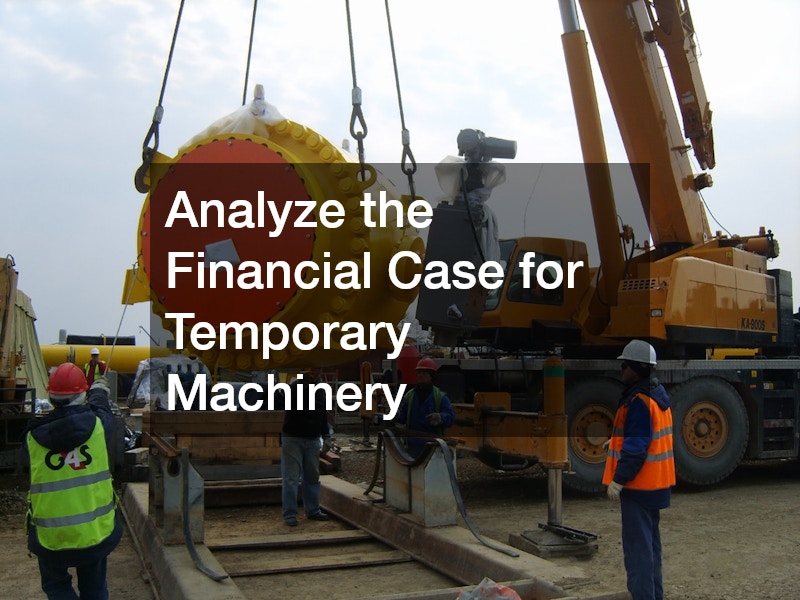
Once you have established the physical and electrical parameters of what your site can handle, the focus must shift to the financial strategy. The construction and manufacturing industries are highly capital-intensive, and tying up millions of dollars in rapidly depreciating physical assets is a risky strategy in a fluctuating economy. Project managers and procurement officers must implement a strict financial framework to decide when it makes long-term economic sense to purchase machinery outright, and when it is far more lucrative to utilize short-term sourcing contracts.
Factor in Long-Term Maintenance and Depreciation
The sticker price of a new machine is only a small fraction of the true cost of owning it. To make an accurate financial decision, you must run a comprehensive Total Cost of Ownership (TCO) analysis, which accounts for the massive hidden expenses that accumulate over the lifespan of the asset.
-
Calculate the burden of maintenance: Owning machinery means you are entirely responsible for its upkeep. This requires hiring specialized, highly-paid heavy diesel mechanics, purchasing expensive diagnostic software, and maintaining a massive inventory of spare parts and hydraulic fluids. Utilizing commercial equipment rentals shifts the entire burden of routine maintenance, fluid changes, and emergency mechanical troubleshooting completely onto the vendor, heavily protecting your bottom line.
-
Account for off-season storage: When a project ends, large machines do not simply disappear. You must pay for secure, monitored, and potentially climate-controlled commercial yard space to store these massive assets while they sit idle, generating zero revenue.
-
Understand rapid depreciation: Heavy machinery depreciates aggressively the moment it is put to work. Furthermore, technology evolves rapidly. Owning an aging fleet means you are constantly fighting against obsolescence, burning more fuel, and producing more emissions than competitors utilizing the newest, most efficient temporary models.
Protect Capital by Leveraging Short-Term Solutions
In any massive industrial project, liquidity is your greatest defense against the unknown. Material costs will fluctuate, weather delays will extend timelines, and unexpected engineering challenges will require immediate cash injections. Tying up all your working capital in heavy iron severely limits your financial agility.
-
Reserve capital for core daily assets: Capital expenditures should be strictly reserved for the core, highly specialized assets that your company uses every single day across all of its varied projects. If a machine is not running 80 percent of the year, it is a liability, not an asset.
-
Match costs to specific project phases: Most industrial projects operate in distinct phases. You only need massive earthmoving capability during the initial grading phase. Relying on a specialized heavy equipment rental for a focused, three-week earthmoving phase preserves massive amounts of cash flow, keeping your project financially liquid and ensuring you are not stuck paying off a machine that sits idle for the next six months.
-
Simplify job-cost accounting: Short-term contracts offer perfectly predictable, fixed line-item costs. You know exactly what the daily or weekly rate is, making it incredibly easy for your accounting department to bill the exact cost of the machinery directly to the client or the specific project phase without having to calculate complex, long-term depreciation schedules.
Secure the Right Muscle for Lifting and Earthmoving

The most visually impressive and operationally critical phases of any industrial project involve the aggressive reshaping of the earth and the hoisting of massive structural components. These tasks require immense raw power, but raw power without precise engineering is incredibly dangerous. Sourcing the heavy logistics required for earthmoving and aerial lifting demands a rigorous analysis of tonnages, load charts, and specific site geometries.
Match the Machine’s Reach and Tonnage to the Task
When dealing with deep excavations, foundation pouring, or trenching for municipal utilities, guessing the required size of the machinery will inevitably lead to project failure. You must rely on precise mathematical calculations derived directly from the engineering blueprints to source the correct muscle.
-
Calculate daily volume requirements: Review the topographical blueprints and calculate the exact volume of cubic yards of earth that must be excavated and moved per day to keep the project on its strict critical path schedule. This calculation directly dictates the bucket capacity required for your machines.
-
Analyze the breakout force: Consider the density of the soil. Moving loose sand requires far less mechanical power than breaking through dense, compacted clay or rocky subterranean layers. Securing an excavator rental that is correctly sized guarantees you have the immense hydraulic breakout force needed to handle the specific geological challenges of your site without constantly stalling the engine.
-
Verify reach and dump height: The machine must not only be able to dig deep enough to reach the required foundation depth, but it must also have the vertical reach to safely dump the excavated material over the high side walls of the heavy-duty articulated dump trucks waiting at the surface.
Outsource Complex Aerial Lifts to Specialists
Hoisting thousands of pounds of steel, concrete, or delicate machinery dozens of feet into the air is the highest-risk activity on any industrial job site. The physics involved are unforgiving, and the liability is absolute.
-
Recognize the limits of in-house equipment: Do not attempt complex, high-altitude structural lifts with in-house telehandlers or small, rough-terrain boom lifts. While these machines are excellent for moving pallets of material around the ground level, they are fundamentally unsuited for precise, heavy structural placement.
-
Transfer the heavy liability: For critical operations like setting massive rooftop HVAC units, erecting structural steel beams, or placing delicate prefabricated modular units, outsource the entire lift operation. Partnering with certified, fully operated crane services transfers the immense liability, the highly complex rigging engineering, and the exorbitant specialized insurance requirements directly to dedicated lifting professionals.
-
Review the critical lift plan: Before any major lift occurs, demand a formal, heavily documented critical lift plan. This plan must scientifically account for the exact weight of the load, the radius of the boom, the ground bearing pressure of the outriggers, and the maximum permissible wind speeds, ensuring the operation is executed with zero guesswork.
Address Surface Preparation and Ongoing Maintenance

While the massive earthmovers and towering lifting machines often capture the most attention, the true longevity and daily efficiency of an industrial project rely heavily on the specialized finishing tasks and the relentless maintenance of material handling equipment. Preparing raw surfaces for long-term survival against the elements, and keeping the daily supply chain moving, require highly specific sourcing strategies that prioritize precision and rapid response times.
Specify the Exact Surface Finish Required for Coatings
In the industrial sector, applying paint or anti-corrosive coatings is not a cosmetic endeavor; it is a critical structural necessity designed to prevent the catastrophic failure of steel and concrete due to rust, chemical exposure, or extreme weather. However, the most expensive, advanced epoxy coating in the world will fail and peel off in weeks if the surface beneath it is not perfectly prepared.
-
Understand the required anchor profile: Before applying high-performance industrial epoxies or polyurethanes to raw steel tanks, structural beams, or concrete flooring, you must verify the exact surface profile required by the coating manufacturer’s strict specifications. This profile is measured in “mils” and dictates how deeply the coating will mechanically bite into the substrate.
-
Select the appropriate blasting media: Sourcing the correct commercial abrasive sandblasting machinery and matching it with the perfect media is the only way to achieve this precise anchor pattern. Different substrates require vastly different treatments. Crushed recycled glass might be perfect for removing light rust from structural steel, while softer walnut shells are required for cleaning delicate masonry without destroying the facade, and heavy steel grit is necessary for stripping aggressive industrial marine coatings.
-
Manage the environmental containment: Surface preparation generates massive amounts of hazardous dust and airborne particulate. Ensure the vendor you source this equipment from can also provide the necessary massive HEPA filtration vacuums, negative air pressure containment tents, and specialized operator breathing apparatuses to keep your site compliant with strict environmental and respiratory safety regulations.
Establish a Rapid-Response Maintenance Protocol
The unsung heroes of any massive industrial project are the machines that continuously move pallets of raw materials, maneuver heavy tools, and transport components from the staging yards to the active assembly zones. These material handling machines operate relentlessly, day and night, and under this heavy use, they will inevitably break down.
-
Acknowledge the cost of downtime: When a primary material handler breaks a hydraulic hose or blows a transmission, your highly paid skilled laborers are left standing around with nothing to build. Never wait for a breakdown to occur before you start looking for a qualified mechanic.
-
Draft strict Service Level Agreements (SLAs): Establish a formal SLA with a mobile mechanical vendor long before the project officially begins. Having a dedicated forklift repair service on speed dial with guaranteed, contractually bound four-hour emergency response times prevents your entire site’s supply chain from coming to a grinding, highly expensive halt.
-
Stockpile critical wear parts: Work with your maintenance partner to identify the most common points of failure for your specific fleet (e.g., hydraulic O-rings, specific tire sizes, common electrical relays) and require them to keep those exact parts stocked in their mobile service trucks, ensuring repairs are completed on the first visit rather than waiting days for factory shipping.
Source Crucial Attachments and Local Vendor Support
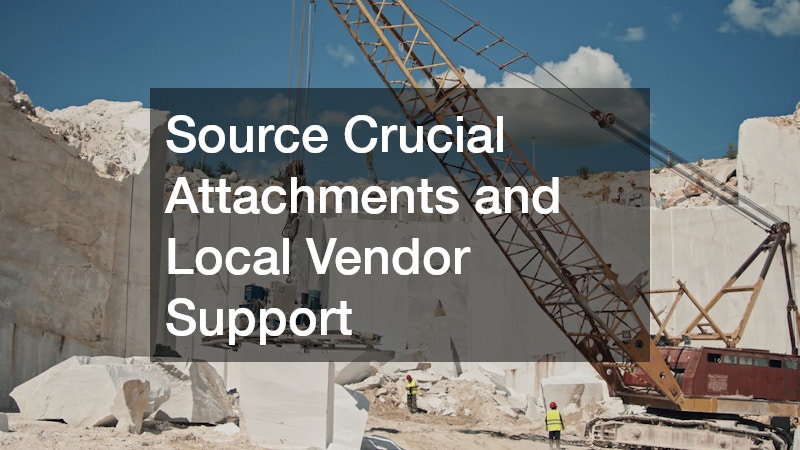
The final phase of a masterful equipment sourcing strategy involves looking closely at the details that connect the machines to the materials, and optimizing the geographical logistics of your vendor network. The most powerful machine on earth is rendered entirely useless—and highly dangerous—without the correct, certified attachments. Furthermore, the reliability of your entire operation heavily depends on the physical proximity and responsiveness of the partners supplying these critical components.
Never Compromise on Load-Bearing Accessories
In industrial lifting and hoisting, the focus is often placed entirely on the massive machine doing the pulling, while the critical hardware connecting the machine to the load is treated as an afterthought. This is a fatal mistake. A lifting operation is only as strong as its absolute weakest link, and that link is usually a small piece of connecting hardware.
-
Demand rigorous inspection tags: The massive hook of a towering machine is only as safe as the straps and shackles attaching it to the load. You must ensure that every single shackle, heavy-duty spreader bar, wire rope, and synthetic sling on your site is individually tagged, recently inspected, and strictly rated for the specific weight of the load being moved.
-
Avoid the dangers of internal stockpiles: Storing old, degrading lifting straps in a damp shipping container for years and then pulling them out for a heavy lift is an invitation for disaster. Synthetic materials degrade over time from UV exposure and chemical contact, even when not in use.
-
Transfer the inspection liability: Utilizing a specialized rigging equipment rental provider ensures you always have immediate access to freshly certified, impeccably maintained, and technologically advanced lifting hardware. This strategy completely removes the massive liability of tracking, inspecting, and periodically destroying old, unsafe gear within your own internal inventory.
Prioritize Geographic Proximity for Rapid Replacements
When planning a massive project, it is tempting to source machinery from massive, national conglomerates that might offer a slightly lower daily rate on paper. However, this strategy often ignores the brutal reality of industrial construction: machines break, components fail, and project scopes change unexpectedly. When an essential machine goes down, every single hour you wait for a replacement costs the project thousands of dollars in lost labor and delayed schedules.
-
Evaluate the vendor’s physical footprint: Vet your potential vendors heavily based on the physical distance of their nearest active dispatch yard to your specific job site. A vendor located three states away cannot help you when a critical engine fails at two in the afternoon on a Friday.
-
Demand same-day logistical support: Emphasize to your procurement team that establishing deep relationships with highly responsive local equipment rentals guarantees a level of agility that national chains simply cannot match. A geographically close partner can load a replacement machine onto a flatbed or dispatch a critical spare part to your site on the exact same day the failure occurs.
-
Build collaborative, localized partnerships: Local vendors understand the unique environmental challenges, municipal regulations, and soil conditions of your specific region better than anyone else. By prioritizing these localized partnerships, you are not just renting iron; you are securing a responsive, collaborative extension of your own logistical team, ensuring your labor force remains productive and your project stays fiercely on schedule.
In conclusion, successful equipment sourcing is a highly delicate, heavily calculated balance of structural engineering, fluid logistics, and rigorous financial strategy. It is not a task that can be delegated to a junior administrator flipping through a catalog. True procurement mastery requires auditing the physical constraints of the site deeply, understanding the massive hidden costs of total ownership, and precisely matching the right hydraulic tonnage and electrical power to the highly specific demands of each project phase.
Meticulously sourcing the right machinery and relentlessly verifying the safety of load-bearing attachments is not just about keeping the ledger under budget; it is the fundamental, non-negotiable baseline for keeping the job site safe. When you supply your workforce with the correct, highly maintained, and perfectly sized tools, you eliminate the desperate workarounds and strained operations that so frequently lead to catastrophic, headline-making accidents.
Do not allow poor procurement to dictate the success of your next massive endeavor. Encourage your project managers and site engineers to pull the blueprints for their next upcoming phase today. Force them to calculate their specific load limits, analyze their true power requirements, and start aggressively vetting local logistics partners immediately. By elevating your sourcing strategy from a simple administrative afterthought to a core operational priority, you construct a flawless blueprint for industrial success.