
For decades, the American labor market was categorized by distinct socio-economic colors. White-collar professionals occupied corner offices, blue-collar tradespeople handled machinery and manual labor, and pink-collar employees powered service, care, and aesthetic industries. These distinctions were rarely neutral; they carried heavy societal expectations regarding gender roles, wage caps, and professional prestige. Men dominated heavy transport, construction, and technical repairs, while women were funneled into early education, personal care, and retail.
Today, this rigid paradigm is collapsing. Economic shifts, evolving cultural norms, a persistent skilled labor shortage, and rising entrepreneurship are erasing the boundaries between pink-collar and blue-collar occupations. Workers are increasingly choosing careers based on earning potential, job security, and personal fulfillment rather than traditional gender expectations. This fundamental transition is altering how local service economies operate, how businesses recruit talent, and how society defines valuable work.
Historical Foundations of Job Segregation
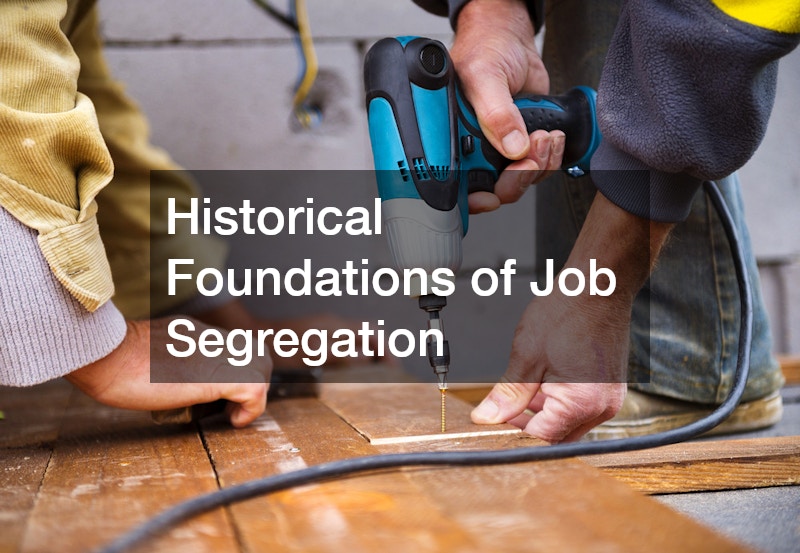
To understand the modern labor shift, one must carefully examine how the mid-twentieth-century workplace became intensely gendered, creating structural divisions that lingered for decades. Following the post-World War II industrial boom, blue-collar manufacturing and trade industries aggressively prioritized manual strength, machinery operation, and technical apprenticeships. These positions were almost exclusively marketed to men through societal expectations, targeted recruiting, and institutional framing. High school vocational programs explicitly channeled young men into shop classes, automotive repair, and mechanical drafting, solidifying a pipeline directly into lucrative factory floors and construction sites. At the same time, rigid social norms actively discouraged women from entering careers that involved heavy equipment, physical labor, or outdoors field environments, casting such work as inherently unsuitable for female employment.
Conversely, the category of “pink-collar” work expanded dramatically alongside the growth of the broader service economy. Positions in personal care, early childhood education, nursing, secretarial administration, and customer-facing retail were framed not as specialized professions, but as natural extensions of traditional domestic roles. Society conditioned women to be viewed as uniquely suited for nurturing children, managing household organization, or assisting clients with personal care and styling.
However, this ideological framework created severe economic consequences. While pink-collar roles required immense interpersonal intelligence, high emotional labor, and extensive specialized training, the market routinely undervalued these skill sets. Because these jobs were framed as “natural female traits” rather than learned expertise, employers justified lower base wages, limited benefits, and few opportunities for upward mobility compared to male-dominated industrial jobs. This systemic undervaluation deeply entrenched economic disparities between male and female workers, laying the groundwork for a persistent gender wage gap. As the industrial economy gave way to a technology-driven, service-oriented market, these historical divisions began to fray, yet the cultural legacy of gendered labor continues to shape wage valuations and workforce expectations today.
Women Breaking Ground in the Trades
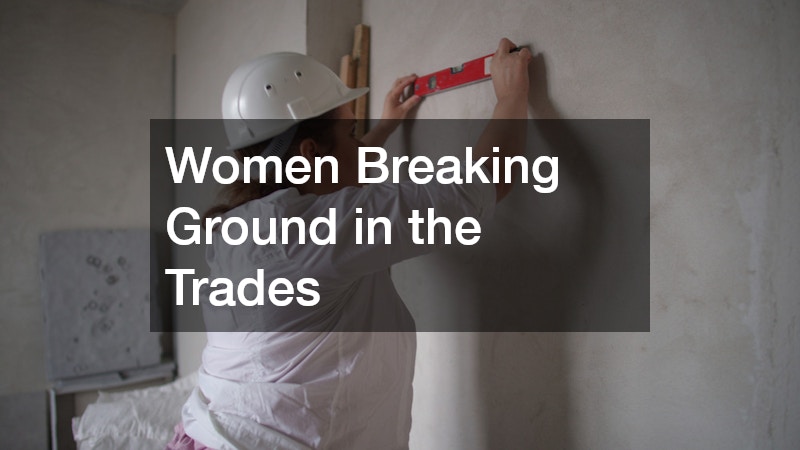
In recent years, the blue-collar sector has faced an unprecedented, severe labor shortage that threatens the stability of essential infrastructure and supply chains. As a massive, aging generation of seasoned mechanics, machine operators, and specialized field technicians reaches retirement age, trade industries are confronting a staggering deficit of skilled workers. In this high-stakes environment, companies can simply no longer afford to ignore half the potential workforce when recruiting talent. Simultaneously, modern women are increasingly recognizing the profound financial independence and security offered by trade professions. Unlike many traditional career paths that require six-figure four-year college degrees, vocational careers offer competitive, family-sustaining wages, robust benefits, and direct entry into the workforce without the crippling burden of student debt.
Driven by these shifting incentives, women are actively dismantling old barriers and stepping into fields that were once almost entirely male-dominated. Today, it is increasingly common to see a woman behind the wheel of a heavy duty towing rig, managing complex, high-risk roadside recoveries that demand a sophisticated mix of mechanical knowledge, spatial geometry, and critical problem-solving under extreme pressure. These high-demand positions offer lucrative competitive pay, clear job security, and rapid career advancement, making them exceptionally attractive alternatives to stagnant, traditional office roles.
Similarly, field service, utility management, and pest control have experienced a profound demographic shift. A female technician working for commercial exterminators brings a fresh, highly effective dynamic to a field traditionally viewed as rugged and male-centric. Female technicians in these roles frequently report high customer trust and exceptional satisfaction rates, proving to both employers and clients that specialized technical knowledge, systematic attention to detail, and analytical problem-solving matter far more than physical stereotypes when diagnosing and resolving complex structural infestation issues.
Even heavy equipment operations within logistics and construction are seeing a marked increase in diversity. Operating a multi-ton forklift or reach truck in a bustling warehouse, port, or distribution center requires intense precision, spatial awareness, and strict adherence to stringent safety protocols. As automated logistics, e-commerce demands, and global supply chain networks continue to expand exponentially, modern certification programs are actively recruiting women who excel in these controlled, fast-paced, and detail-oriented industrial environments.
Finally, the specialized technical repair sector is undergoing a vibrant transformation. Small business owners in thriving urban centers are opening independent garages focused on custom motorcycle repair, performance tuning, and fabrication, where female mechanics expertly diagnose complex engine issues, tune performance parts, and manage daily shop operations. Their growing presence directly challenges the long-standing, exclusive “biker” archetype and powerfully demonstrates to the next generation that mechanical aptitude, structural ingenuity, and technical excellence are entirely gender-neutral.
Men Redefining Personal Care and Early Education
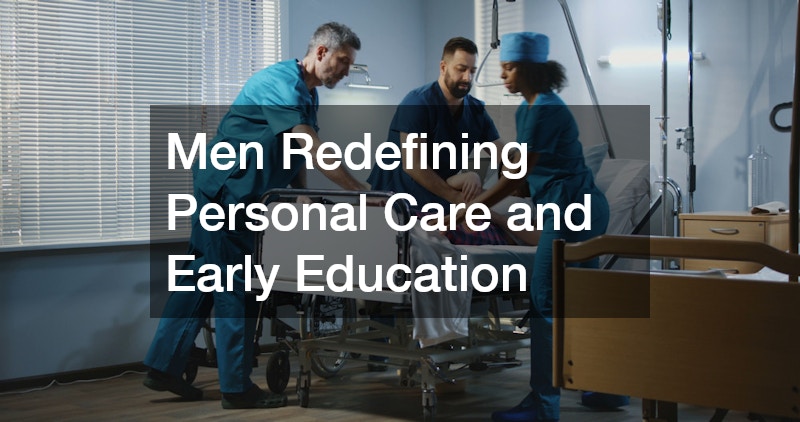
Just as women are entering trade occupations, men are increasingly entering industries historically classified as pink-collar. For years, social stigmas discouraged men from pursuing careers focused on aesthetics, personal wellness, or early childhood development. However, as cultural definitions of masculinity evolve and the wellness economy booms, men are claiming their space in these growing fields.
The personal care industry offers clear examples of this trend. Men are now enrolling in esthetician classes in record numbers, eager to master skincare chemistry, facial treatments, and modern dermatological technology. These professionals bring new perspectives to personal care, serving a diverse client base that includes a growing demographic of male consumers seeking skin health solutions.
Once qualified, these graduates often secure employment at a high-end medical spa, performing advanced aesthetic procedures alongside medical directors. The modern wellness center values technical expertise, patient rapport, and anatomical understanding above traditional gender associations.
The hair care and styling industry has experienced a similar blend of demographics. Male stylists, colorists, and salon owners are thriving in every corner of the market, working at or launching a successful hair salon that caters to all genders. The shift moves away from old-school barbering versus women’s styling, merging techniques to offer comprehensive care for every client type.
Perhaps the most impactful transition is occurring in early childhood development. For generations, society assumed that caring for young children was exclusively female work. Today, male educators are intentionally choosing to work at local preschools, recognizing the crucial role positive male role models play in early cognitive and emotional development. Their presence helps normalize male caregiving and provides young children with a balanced foundational learning environment.
The Shared Space of Special Events and Logistics
As professional barriers dissolve, certain industries serve as dynamic intersection points where traditional pink-collar aesthetics meet blue-collar logistical muscle. The modern wedding and events industry is a primary example of this overlap, bringing together vastly different skills to execute a single, high-stakes experience.
On one side of event planning is the aesthetic and emotional preparation. Small business owners who consult with clients on purchasing bridal gowns must manage intricate inventory, coordinate custom alterations, and deliver high-touch customer service. The role demands business acumen, trend awareness, and emotional intelligence to guide clients through significant purchasing decisions.
Yet, behind the glamour of a modern wedding lies an extensive blue-collar operation. Transporting, staging, setting up outdoor infrastructure, managing waste, and ensuring site functionality require industrial coordination. An event planner relying on an immaculate outdoor venue must contract services for a temporary porta potty system, ensuring site sanitation and comfort for hundreds of guests.
In this space, the division between “soft” aesthetic work and “hard” logistical work completely vanishes. A successful event requires flawless execution from both the retail specialist managing delicate fabrics and the site manager handling sanitation and power supply. Neither can succeed without the other, highlighting the equal necessity of both skill sets in the local economy.
Economic Drivers Behind the Shift
Trade positions offer immediate high-earning potential and financial independence without the crushing weight of student loans. As women increasingly seek self-reliance, high-paying technical roles become vastly more appealing than lower-paying corporate entry roles or administrative positions.
Entrepreneurship provides another major push away from gendered norms. Both service and trade sectors carry low barriers to entry for starting an independent enterprise. Owning a local salon, managing a tow truck fleet, or running a specialty repair facility allows ambitious individuals to dictate their own financial futures regardless of their background.
Rapid advancements in automation and equipment design have also leveled the playing field. Modern machinery relies far more on digital diagnostics, computer interfaces, and hydraulic controls than raw physical strength. Operating complex industrial tools today demands technical intelligence and precision, making physical force irrelevant and opening doors for a much broader workforce.
Finally, younger generations are prioritizing personal satisfaction, flexibility, and financial fairness over outdated social expectations. A career is now viewed primarily as an engine for personal independence rather than an identity bound by traditional gender roles, accelerating the blend across all industries.
Overcoming Structural Barriers and Workplace Cultures

While progress is undeniable, the transition away from gendered labor categories is not without friction. Workers entering non-traditional fields often encounter entrenched workplace cultures, outdated facilities, and lingering biases from clients or colleagues.
Women in heavy industrial trades frequently report challenges with ill-fitting safety gear designed originally for male body proportions, or initial skepticism from older clients when arriving on a service call. Overcoming these hurdles requires trade unions and business owners to invest in inclusive equipment, establish strict anti-harassment policies, and cultivate work environments based strictly on performance and safety.
Similarly, men entering care-focused industries can face implicit bias regarding their motives or qualifications. Male early childhood educators or skin care specialists must sometimes work harder to establish immediate trust with clients and parents. Overcoming these barriers requires educational institutions and industry boards to actively normalize male participation through targeted marketing and inclusive professional support networks.
Companies that proactively address these cultural hurdles gain a distinct competitive advantage. By fostering inclusive recruitment, offering flexible training programs, and evaluating employees strictly on skill and reliability, businesses can tap into a far wider pool of talent during an era marked by widespread labor shortages.
The Future of Modern Labor
The traditional terms pink-collar and blue-collar are rapidly becoming obsolete relics of twentieth-century economic theory, ill-suited for the dynamic complexities of today’s workforce. As the modern labor market continues to evolve alongside technological integration and changing societal values, the intrinsic worth of work is being thoroughly reassessed based on direct utility, specialized technical skill, and tangible economic impact rather than historical demographic norms or outdated cultural expectations. For decades, these rigid classifications artificially capped earning potential, restricted talent pools, and created artificial barriers between different forms of essential labor. Today, those artificial boundaries are dissolving as markets demand versatility, practical expertise, and higher operational efficiency across all industrial and service sectors.
Future success in the local service economy will unequivocally belong to the businesses and forward-thinking workers who boldly reject these traditional limitations. Whether analyzing complex electronic engine diagnostics, managing advanced clinical skin therapies, driving heavy recovery vehicles through high-risk environments, or educating the next generation, modern workers are proving daily that professional competency has no gender. Skills that were once compartmentalized as either strictly physical or purely nurturing are now recognized as overlapping facets of modern expertise, requiring a sophisticated combination of critical thinking, adaptability, and specialized training.
By systematically dismantling outdated workplace labels, society actively creates a far more resilient, highly adaptable, and prosperous economic landscape. Workers gain the genuine freedom to build fulfilling careers aligned precisely with their true talents, personal ambitions, and practical interests, unburdened by legacy stereotypes. At the same time, critical industries benefit enormously from access to a significantly broader, more diverse, highly skilled, and deeply motivated workforce. The total elimination of gendered labor categories is no longer just a theoretical social ideal. It is an active economic transformation that is already shaping the future of work, driving innovation, and unlocking unprecedented productivity across every trade, technical field, and essential service in the modern economy.